Home » Attractions » MOUNT KAHUZI
MOUNT KAHUZI
Mount Kahuzi is a huge, dormant volcano in the Democratic Republic of Congo, and it’s a magnet for anyone who loves adventure and wild places.
It rises right out of Kahuzi-Biega National Park, one of the biggest parks in the region at over 6,000 square kilometers.
The landscape shifts as you climb — dense wet lowland rainforest at the bottom, bamboo forests mid-way, and sub-alpine heather near the top.
UNESCO made it a World Heritage Site in 1980 because it protects species you won’t find in many other places, especially the endangered eastern lowland gorillas — also called Grauer’s gorillas or Gorilla beringei graueri.
Most people come for gorilla trekking in Kahuzi-Biega, but the hiking here is just as good.
Steep slopes, crazy views, and the vegetation changes constantly — swampy marshlands, bamboo thickets, you name it.
These lowland gorillas are different from the mountain gorillas in Virunga National Park nearby. They’re stockier, with broader hands and short muzzles. Seeing them up close hits different.
Tours usually start at the park headquarters in Tshivanga. Rangers will brief you on safety and how to behave around wildlife before you head out to hike Mount Kahuzi.
Yes, the region has had political instability. But the Congolese Institute for the Conservation of Nature (ICCN) works hard to keep visitors safe, and trips run smoothly.
Whether you’re here to spot Rockefeller’s sunbird or to stand on the summit looking out over Lake Kivu, Mount Kahuzi in Kahuzi-Biega NP delivers a real African safari — equal parts adrenaline and quiet beauty. It’s still a hidden gem.
Here’s what you should know about Mount Kahuzi.
Location of Mount Kahuzi
Mount Kahuzi sits in eastern DR Congo, on the western shore of Lake Kivu, in the Albertine Rift Valley inside Kahuzi-Biega NP.
It’s the centerpiece of the park, about 40 kilometers west of Bukavu town.
You’re close to the Rwandan border here — the Rusizi border crossing is the easiest way in if you’re coming from Rwanda.
The park has a lowland section with massive rainforests and a highland sector that climbs to the peaks. Mount Kahuzi’s coordinates are roughly 2°30’S, 28°45’E. It’s part of the Mitumba Range.
Goma is about five hours away by road. Kigali Airport is a full day’s drive. The transitional rainforest forms a corridor that links the highland and lowland areas, so wildlife can move freely through one continuous belt of vegetation.
More Information on Kahuzi Biega National Park
Kahuzi-Biega is a biodiversity hotspot. It covers both lowland and highland terrain, connected by that critical corridor. It was set up to protect eastern lowland gorillas, and it works — 136 mammal species live here, including 13 primates.
Its UNESCO World Heritage status matters because this park holds the world’s largest population of Grauer’s gorillas.
Vegetation changes with altitude: bamboo forests on the mid-slopes, sub-alpine plants near the peaks.
BirdLife International lists 349 bird species here, 42 of them endemic.
Illegal mining and poaching are still problems, but ICCN rangers patrol constantly.
This is one of Africa’s richest parks ecologically, where Congo Basin rainforests meet the Albertine Rift highlands.
Elevation of Mount Kahuzi in Kahuzi Biega NP
Mount Kahuzi stands at 3,308 meters above sea level. That makes it the highest peak in the Mitumba Range and one of the tallest mountains in any DR Congo park.
That height creates layers — lowland starts around 600 meters, and subalpine heather takes over above 2,600 meters.
The summit gives you panoramic views, but you’ll earn them. Steep slopes, temperature swings.
Mount Biega next door is 2,790 meters, so Kahuzi really dominates the skyline.
Altitudes across the park vary a lot, which is why you get peat bogs in wet ground down low and Afromontane vegetation up high.
Hikes usually start at the park headquarters at a lower elevation, go through bamboo forests, then hit the tough highland section.
Geography and Geology of Mount Kahuzi
Mount Kahuzi is one of two dormant volcanoes here. It’s a classic volcanic cone, but the crater is now covered in thick forest.
The last eruption was at the end of the Pleistocene era.
The slopes have everything: riparian forests along streams, marshland in valleys, and unbroken vegetation from bottom to top.
A narrow corridor links the highland and lowland parts, so habitats don’t get cut off.
Up high, you’ll see subalpine prairies and tree heathers. Down low, it’s wet lowland rainforest.
The Albertine Rift’s tectonic activity built this place, leaving fertile soils that feed incredible biodiversity.
From the top, you can see Lake Kivu’s western shore, Bukavu town, and on clear days, all the way toward Uganda and Rwanda.
History of Mount Kahuzi in Kahuzi Biega National Park
Protection started in 1937 when Belgian colonial authorities established the Zoological and Forest Reserve of Mount Kahuzi.
The point was to save Mount Kahuzi’s unique plants and animals as human pressure grew.
In 1951, they added the Biega forest, creating a bigger buffer.
By 1970, it was officially Kahuzi-Biega National Park — 6,000 square kilometers, one of Congo’s largest.
UNESCO listed it as a World Heritage Site in 1980 for conserving endemic species. The park is named for the two dormant volcanoes, Kahuzi and Biega, that shape it.
The Second Congo War in the late 1990s was brutal. Poaching and habitat loss hit gorillas hard — from an estimated 275 in 1993, numbers crashed.
Recovery after the war involved international groups like the Wildlife Conservation Society and WWF. They helped habituate gorilla families for tourism.
Today the Congolese Institute runs the park, balancing conservation with the needs of nearby communities.
Volcanic Activity at Mount Kahuzi
Mount Kahuzi is extinct. It’s been dormant since the end of the Pleistocene, with no eruptions in recorded history. That means hiking is safe — nothing like active Nyiragongo in Virunga National Park.
Mount Biega, its twin, has the same geology. Both are ancient craters now full of forest.
Old lava flows made the soil rich, which is part of why plant diversity here is so high.
You won’t see lava or ash today, but you will see peat bogs and mineral springs from that volcanic past.
Rangers explain this geology on guided nature walks — it’s key to understanding the ecosystem.
Things To See at Mount Kahuzi During Congo Safari Excursions
- Eastern Lowland Gorillas
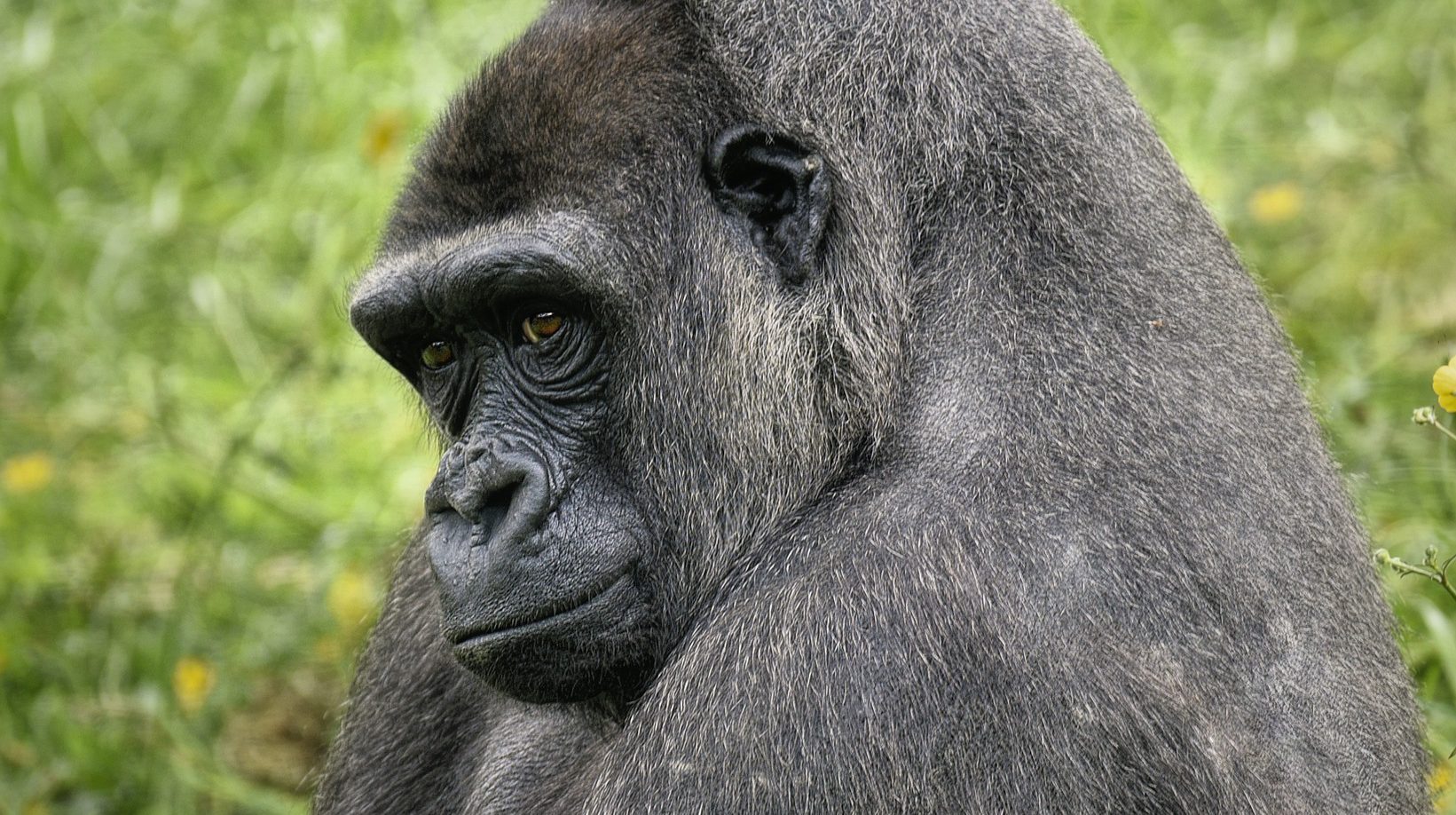
The main draw. These gorillas are bigger than mountain gorillas and live in habituated families that you can trek to. Two groups are open for tourism. You get an hour with them — watching them feed, play, care for young, and interact. The silverback runs the show.
Harder to find in the wild here, but they’re in the trees. For guaranteed sightings, visit Lwiro Sanctuary nearby. It rehabilitates chimps and other primates.
- Birds
Over 340 species. Birders come for endemics like Rockefeller’s sunbird, Shelley’s crimsonwing, Grauer’s broadbill, yellow-crested helmet-shrike, and Congo peafowl. You’ll see plenty on a Congo birding tour.
- Other Primates
Lots of monkeys: red-tailed, blue, olive baboons, owl-faced, Angolan black, Dent’s mona, and more. At night, there’s Bosman’s potto and eastern needle-clawed galago.
- Other Mammals
Beyond primates: bush elephants, bush buffalo, forest hogs, giant forest genet, aquatic civet, bongos, otter shrew, Alexander’s bush squirrel, Thomas tree squirrel, and the incredibly rare Mount Kahuzi climbing mouse. Maclaud’s horseshoe bat comes out at night — you might catch it if you’re camping.
- Plants and Vegetation
Tree heathers, bamboo, transitional rainforest species, and endemics like Senecio kahuzicus. Marshland and riparian forests follow the waterways. Peat bogs sit in low spots.
- Hiking Trails
The Tshibati Waterfalls Trail takes you through the forest to the actual falls. Other trails go to summits, through bamboo and subalpine zones.
Come see it for yourself — this place is the real deal.
Things To Do at Mount Kahuzi During Congo Tours
This is the classic. Four hours up, three hours down through montane forest to the 3,308-meter summit. Views over Lake Kivu, Bukavu, and the whole park. You might spot primates on the way. Dry season means dry trails and clear views. Bring sturdy boots, rain gear, and spare camera batteries.
Permits are $400 per person. Groups are limited to eight, and you get one hour with a habituated family. Starts early morning with a briefing. Tracking time varies. Watching gorilla behavior beats a quick zoo visit every time.
- Wildlife Viewing
Safaris in the lowland sections can turn up elephants and buffalo. Night walks are good for spotting genets.
Guided walks target endemics from the 349+ species recorded. The dry season has clear skies. Wet season brings migrants if that’s your thing.
Visit communities in Bukavu to learn local traditions. Cultural tours often include dances and crafts.
Do any of these, and you’ll leave with stories.
Congo Safari Accommodations to Stay at When Exploring Mount Kahuzi
- Budget: Hotel Begonias, basic lodges near park headquarters.
- Mid-Range: Coco Lodge Bukavu, Lakeside Hotel Bukavu, Panorama Hotel Bukavu.
- Luxury: Orchids Safari Club / Orchid Safari Camp, Mount Kahuzi Hotel — high-end with great views.
- In Bukavu: Plenty of guesthouses.
- Camping: Possible but you need your own tent and sleeping bag. Some sites require permits.
Costs of Visiting Mount Kahuzi
| Activity/Item | Cost (USD) for Foreign Non-Residents |
| Park Entry Fee | 50-100 per day (Varies by duration) |
| Gorilla Trekking Permit | 400 per person (Includes one hour with a lowland gorilla family) |
| Hiking Mount Kahuzi | 100 per person (Guided) |
| Guide Fees | 20-50 (Mandatory for treks) |
| Accommodation (Budget) | 30-60/night (Basic lodges) |
| Accommodation (Mid-Range) | 80-150/night (Hotels in Bukavu) |
| Accommodation (Luxury) | 200+/night (Premium options) |
| Transport (from Bukavu) | 50-100 (Shared or private) |
| Visa for DRC | 100-300 (Depending on the type) |
Book permits in advance; costs support conservation.
How to Get to Mount Kahuzi in Kahuzi Biega National Park?
Fly into Kigali Airport in Rwanda, drive seven hours to the Rusizi border, then two hours to park headquarters.
You can also charter a flight to Kavuma Airfield or drive five hours from Goma. From Bukavu it’s 30 minutes to an hour by road.
Use trusted operators for transport. Don’t travel at night.
Best Time to Visit Mount Kahuzi in Kahuzi Biega National Park
Dry season — June to September, December to February — is best. Trails are dry, views are clear. That’s peak tourist season, too.
Low season — March to May, October to November — has discounts and fewer people. The rainy season means lush greenery but slippery paths. Pick what matters to you.
Threats Facing Mount Kahuzi and Its Attractions
- Poaching of gorillas and other animals for bushmeat.
- Illegal mining in old sites, wrecking habitat.
- Political instability and militias/rebels pushing wildlife out.
- Habitat fragmentation from people moving in.
- Bushmeat hunting and pressure from refugees.
- Climate change messing with vegetation.
Ongoing Conservation Efforts on Mount Kahuzi in Kahuzi Biega National Park
- ICCN patrols and ranger training.
- Gorilla habituation so tourism funds protection.
- Community programs for alternative incomes.
- Trust fund support.
- Partnerships with Wildlife Conservation Society, WWF, and BirdLife International.
- Anti-poaching units and clear boundary marking.
- Lwiro for primate rehab.
Packing List for Mount Kahuzi in Congo Tours
- Sturdy hiking boots and comfy clothes.
- Rain jacket, hat, gloves — temperatures change.
- Insect repellent, sunscreen, first-aid kit.
- Camera with spare batteries, binoculars.
- Water bottle, energy snacks, backpack.
- Sleeping bag and tent if camping.
- Long pants/sleeves for thorns and branches.
- Passport, visa, permits.
Commonly Asked Questions About Mount Kahuzi
- Is It Safe To Visit Congo?
The Kahuzi-Biega region is generally safe for tourists if you book guided tours with reputable operators and check current travel advisories. Eastern DRC has been more stable lately, and park authorities take security seriously — armed rangers are standard. Still, use trusted local guides, don’t go off on your own in remote areas, and check government warnings before you go.
- Is It Safe To Hike Mount Kahuzi?
Yes, with park rangers. They know the trails, the routes are maintained, and there haven’t been recent incidents with tourists on guided hikes. Rangers have radios and keep the group together.
- How Long Is The Mount Kahuzi Hike?
About four hours up, three hours down — a full day. Depends on your fitness, weather, and how often you stop for photos or wildlife.
- How Many Mountains Are In Kahuzi-Biega National Park?
Two main dormant volcanoes: Mount Kahuzi at 3,308 meters and Mount Biega at 2,790 meters. Those are the two big ones people visit.
Mount Kahuzi is an extinct volcano in Kahuzi-Biega National Park, DR Congo. It climbs 3,308m through rainforest, bamboo, and alpine meadows. You can see lowland gorillas, owl-faced monkeys, and 349 bird species on a tough 7-hour hike. Contact us now to book your Mount Kahuzi safari and take on this UNESCO biodiversity hotspot.
What you may like
-
FAUNA IN KAHUZI BIEGA NATIONAL PARK-ANIMALS
Read more -
Eastern Lowland Gorillas – Eastern Gorilla of Kahuzi-Biega National Park
Read more -
THE EASTERN CHIMPANZEES OF KAHUZI-BIEGA NATIONAL PARK
Read more -
FLORA IN KAHUZI BIEGA NATIONAL PARK – VEGETATION
Read more -
LANDSCAPE OF KAHUZI BIEGA NATIONAL PARK, CONGO
Read more -
Mount Kahuzi Climbing Mouse
Read more
Want to visit Kahuzi-Biega?
Kahuzi-Biega National Park, is a secure area close to Bukavu town in Eastern Democratic Republic of Congo.
