Home » Uncategorized » CHIMPANZEE TOURS IN LWIRO PRIMATES REHABILITATION CENTER & CHIMPANZEE SANCTUARY
CHIMPANZEE TOURS IN LWIRO PRIMATES REHABILITATION CENTER & CHIMPANZEE SANCTUARY
Planning a trip to DR Congo and hoping to see chimpanzees in a responsible setting? A visit to the Lwiro Primates Rehabilitation Center and Chimpanzee Sanctuary is a memorable way to learn about conservation work while observing these remarkable animals up close.
Set near Kahuzi-Biega National Park in eastern Democratic Republic of Congo, the Lwiro Primates Rehabilitation Center (CRPL) is one of the region’s key sanctuaries for orphaned and rescued primates—especially chimpanzees.
For visitors, it’s a chance to see rehabilitation efforts first-hand, support ethical wildlife care, and understand why primate protection matters—without compromising animal welfare.
A guided visit to Lwiro is more than a quick stop for photos. You’ll leave with a better understanding of primate rescue, rehabilitation, and the long-term work involved in protecting chimpanzees.
Here’s what to know before you go—and what to expect once you arrive.
About Lwiro Primates Rehabilitation Center
The Lwiro Primates Rehabilitation Center—also known as the Centre de Réhabilitation des Primates de Lwiro (CRPL)—provides a safe place for rescued primates in South Kivu Province, including many orphaned chimpanzees.
The center is based in Lwiro village, about 4 km from Kahuzi-Biega National Park (a UNESCO World Heritage Site), within the research zone of the Centre de Recherche en Sciences Naturelles (CRSN).
It is widely respected for chimpanzee rehabilitation and broader primate conservation, caring for animals rescued from poaching and the illegal pet trade.
Founded in 2002 by the Congolese Institute for Nature Conservation (ICCN) and the CRSN, the center rescues, shelters, and rehabilitates primates affected by wildlife trafficking and other threats.
Today, CRPL cares for a large chimpanzee population along with other monkey species such as baboons, red-tailed monkeys, and vervets (numbers can vary over time as rescues and transfers happen).
The sanctuary is known for rescue and rehabilitation work, conservation education, support for wildlife law enforcement, veterinary and behavioural care, and community outreach—often in partnership with local and international organisations.
The Chimpanzees at Lwiro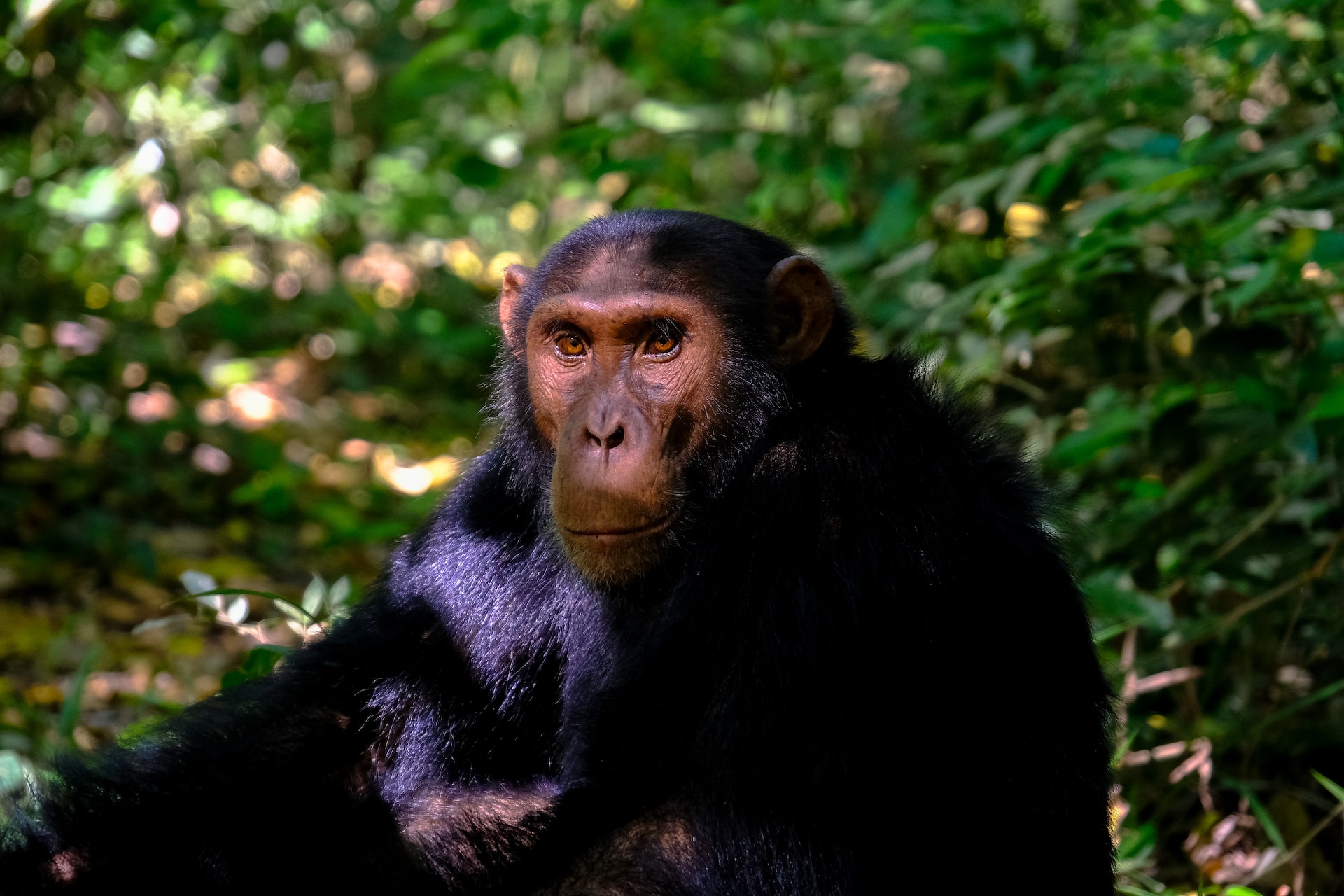
Most of the chimpanzees at Lwiro are eastern chimpanzees (Pan troglodytes schweinfurthii), a subspecies found across parts of the Congo Basin.
Many arrive after being orphaned through poaching and the bushmeat trade. Others are rescued from illegal capture and sale.
When chimpanzees are brought to the sanctuary, a dedicated veterinary team and experienced caregivers focus on both physical recovery and long-term behavioural wellbeing.
They are provided with a balanced diet, regular health checks, and daily monitoring to make sure each individual is thriving.
To encourage natural behaviour, the team groups chimpanzees into social units that mirror wild communities as closely as possible.
Chimpanzees share many biological and social traits with humans, including complex communication, strong social bonds, and group living.
Adult males can reach about 1.6 metres in height and commonly weigh around 40–70 kg. Females typically give birth to a single infant after a gestation of roughly eight months.
The Lwiro Tour Experience
A visit to Lwiro is a relaxed, educational experience that suits travellers, students, researchers, and anyone interested in conservation.
Most tours start at the reception area and continue with a guided walk to the viewing areas around the enclosures.
These spaces are built to give the primates room to climb, explore, and interact, while visitors observe from a safe, controlled distance.
During the visit (often 1–2 hours), you may see chimpanzees feeding, resting, grooming, or taking part in enrichment and training activities that support their rehabilitation. Longer, more immersive options may be available for researchers and volunteers.
Guides and staff share practical insights about the animals, the center’s work, and the challenges of conservation in the region.
For visitors who want a deeper look, the sanctuary may arrange limited behind-the-scenes activities—such as observing food preparation, enrichment sessions, or (where appropriate) veterinary work—always under staff supervision and with strict welfare rules.
What to Expect on the Tour
On a typical visit, you can expect to:
- Learn how chimpanzee rehabilitation works from experienced guides
- Hear the background of how rescued chimpanzees arrive at the sanctuary
- Observe social behaviour such as grooming, communication, play, and (sometimes) tool use in spacious, natural-style enclosures
- Support conservation education and local livelihoods through responsible tourism
- See other rescued species on site as well, which may include different monkey species and a variety of birds and small wildlife (depending on current rescues)
This is a sanctuary, not a petting zoo. For everyone’s safety—and to protect the chimpanzees—visitors do not touch or feed the animals.
Combine Lwiro with Other Congo Safari Activities
Many travellers pair a Lwiro visit with other experiences in eastern DRC, such as:
- Eastern lowland gorilla trekking in Kahuzi-Biega National Park
- Nature walks and birdwatching in the forests around Kahuzi-Biega
- Trips to Virunga National Park (where conditions allow) for other primate and volcano-focused excursions
- Educational visits at the Centre de Recherche en Sciences Naturelles (CRSN)
Taken together, these activities give a fuller picture of the Kivu region’s biodiversity—and your visit helps support conservation and local jobs.
Rules to Follow During Your Visit
To keep both visitors and animals safe, the sanctuary asks guests to follow these guidelines:
- Do not touch or feed the animals
- Keep noise low; avoid flash photography unless staff confirm it’s allowed
- Stay with your guide at all times
- Do not bring food into viewing areas, and do not litter
- Respect the animals’ space and follow staff instructions
- No smoking near the animals
- If you feel unwell (especially with flu-like symptoms), postpone your visit
- Keep a safe distance (commonly 7–8 metres) from the chimpanzees
- Stay on designated paths to protect the habitat
These guidelines reduce stress for the animals and help prevent disease transmission between humans and primates.
Where to Stay Near Lwiro
Many visitors base themselves in Bukavu or near Kahuzi-Biega National Park. Depending on your budget and availability, options may include:
- Orchid Safari Lodge
- Hotel Begonias
- Exodus Bukavu Hotel
- Mount Kahuzi Hotel
Staying in this area can make it easier to combine Lwiro with activities in and around Kahuzi-Biega National Park.
Tour Fees and Booking
Entrance fee: fees can change, but visitors often report figures in the range of about $30–$50 per person. Confirm current rates when you plan your visit.
Visits are commonly arranged in one of the following ways:
- Through local tour operators or partner institutions
- By contacting the sanctuary directly for availability and visitor guidelines
- As part of a wider itinerary that also includes Kahuzi-Biega National Park
Planning tip: If you have a few days in the area, consider combining Lwiro with Kahuzi-Biega (and other nearby sites) so you get both a conservation-focused visit and time in the forest.
Common requirements: a valid DRC visa, travel insurance, and (if you plan to trek in Kahuzi-Biega) the relevant park permits.
How to Get to Lwiro (Bukavu Area)
- By Road
From Bukavu, the drive is often around 40 minutes (roughly 30 km). From the Kahuzi-Biega Park headquarters at Tshivanga, it’s typically about 20 minutes by road.
- By Air
- Fly into Kigali International Airport (Rwanda), then travel overland to Bukavu
- Fly into Kavumu Airport near Bukavu or Goma Airport and take a road transfer
- By Boat
Some travellers also move between lakeside towns on Lake Kivu by boat, then continue overland to Bukavu. Routes and schedules can vary, so it’s best arranged locally.
Many itineraries combine Lwiro with time in Kahuzi-Biega National Park, especially for eastern lowland gorilla trekking.
Best Time to Visit
Access is often easiest in the drier months—typically June to September and December to February—when roads are more reliable and outdoor activities around Bukavu and Kahuzi-Biega are less weather-dependent.
Challenges the Sanctuary Faces
Like many rehabilitation centres, Lwiro continues to face ongoing challenges, including:
- Limited funding for food, medical care, staffing, and facility improvements
- A continued need to respond to new rescue cases linked to poaching
- Pressure from illegal wildlife trafficking, including the pet trade
- Security and logistics constraints that can change with regional conditions
- The need for broader public awareness and consistent local support
To address these issues, the center works with conservation partners, NGOs, and community stakeholders—combining animal care with education and responsible ecotourism.
Conservation Impact: Why Your Visit Matters
Entrance fees and donations help fund practical work such as:
- Feeding programmes and veterinary care for rescued primates
- Enclosure maintenance and enrichment activities that support rehabilitation
- Conservation education and anti-poaching awareness efforts
- Employment and training for local staff and caregivers
In short, your visit supports day-to-day care and the wider conservation work happening around Bukavu.
Practical Travel Tips
- Visa and documents: confirm entry requirements for DRC and carry the paperwork needed for any national park visits
- Local guidance: consider travelling with a licensed operator or local guide who can advise on logistics and current conditions
- What to wear: comfortable walking shoes, light layers, and rain protection (weather can change quickly)
- Photography: ask staff about the rules on the day and avoid flash near animals
If you’re building an itinerary in eastern DRC, Lwiro is a worthwhile stop for travellers who want a conservation-focused experience.
FAQs
- Is it safe to visit Lwiro Chimpanzee Sanctuary?
Safety can change by location and time. Lwiro is close to Bukavu, but it’s still wise to check current travel advice, confirm road conditions, and organise your visit through the sanctuary or a reputable local operator.
- Can I touch or feed the chimpanzees?
No. Visitors aren’t allowed to touch or feed the chimpanzees. This protects the animals and reduces the risk of disease transmission. If feeding time happens during your visit, you’ll watch from the designated viewing area at a safe distance.
- Are any chimpanzees released back into the wild?
Sometimes, but not always. Whether a chimpanzee can be released depends on health, behaviour, long-term survival chances, and the availability of a suitable release site. Decisions are made case by case as part of wider conservation plans.
- Why visit Lwiro Chimpanzee Sanctuary?
A tour at Lwiro isn’t just about seeing chimpanzees. It’s a chance to understand how rescues happen, what rehabilitation looks like day to day, and why protecting great apes in eastern DRC takes long-term effort and local collaboration.
Your entrance fee helps support the centre’s care and education work. If you want to contribute further, staff can usually share appropriate ways to help—such as donations or approved supplies—without disturbing the animals.
Conclusion
Lwiro Primates Rehabilitation Center offers a thoughtful way to learn about chimpanzee rescue and care in eastern DR Congo. A visit can fit well alongside time in Bukavu and Kahuzi-Biega National Park—and it supports the people doing the daily work of rehabilitation and conservation.
What you may like
Want to visit Kahuzi-Biega?
Kahuzi-Biega National Park, is a secure area close to Bukavu town in Eastern Democratic Republic of Congo.
