Home » Attractions » FLORA IN KAHUZI BIEGA NATIONAL PARK – VEGETATION
FLORA IN KAHUZI BIEGA NATIONAL PARK – VEGETATION
Kahuzi-Biega National Park, located in the eastern Democratic Republic of Congo, is a UNESCO World Heritage Site and one of the protected areas on the African continent, renowned for its exceptional biodiversity and varied flora/vegetation in Sub Saharan Africa, making it a top safari destination worth exploring during Congo safaris.
The park’s ecosystem supports continuous forest vegetation, including mountain rain forest, swamp forest, riparian forests, and patches of bamboo forest grows.
This is a detailed overview of the Kahuzi-Biega National Park Flora!
Kahuzi-Biega National Park
Kahuzi-Biega National Park, a UNESCO World Heritage Site in the Democratic Republic of Congo’s South Kivu region in the east, spans 6,000 km² across the eastern mountainous sector and western lowland sector.
Established in 1970, as one of the protected areas in Congo, it protects continuous forest vegetation, including bamboo forest, mountain rainforest, and high/low altitude rainforest.
Home to over 200 Eastern Lowland Gorillas, eastern chimpanzees, and bush elephants, it harbors diverse and abundant fauna and over 136 mammal species.
The park lies near Lake Kivu, featuring two dormant volcanoes—Mount Kahuzi and Mount Biega.
Managed by the Congolese Institute for Nature Conservation along with the Wildlife Conservation Society, it’s a stronghold for nature preservation/conservation and tourism development despite facing very serious threats.
Visitors to Kahuzi-Biega National Park can enjoy Congo eastern lowland gorilla trekking, chimpanzee tracking & habituation, bird watching, and hiking, among other activities, while witnessing the park’s unique flora.
The park’s unique biodiversity and landscapes make it a memorable safari destination worth exploring during Congo safaris!
Flora Location and Ecological Zones
Kahuzi-Biega National Park spans over 6,000 square kilometers, showcasing a diverse flora that changes significantly with altitude and terrain.
The park’s unique geographical position extends from the western lowland sector to the high-altitude sector, with altitudes ranging from 600 meters to over 3,300 meters above sea level.
The ecological zones include.
1) Lowlands (Western Side): Dominated by thick, Guineo-Congolian wet equatorial rainforests.
2) Montane Zone (Eastern Side): Features rare sites in Sub-Saharan Africa that show all stages of the low to highland transition, including six distinguishable primary vegetation types: high-altitude rainforests, swamp forests, mountain rainforest, subalpine heather, and bamboo forests.
3) Subalpine Zone: Found at the summit of Mounts Kahuzi and Biega above 2,600 meters, with species like Erica rugegensis and Senecio kahuzicus.
The park’s floral diversity is exceptional, with over 1,178 plant species recorded in the high-altitude sector alone.
Kahuzi-Biega National Park is one of the few places in sub-Saharan Africa where a full and stunning transition of vegetation stages can be found, ranging from low-altitude sector/rainforest to afro-subalpine ecosystems.
Types Of Flora in Kahuzi-Biega NP Found in Eastern Democratic Republic of Congo
Kahuzi-Biega National Park boasts several distinguishable primary vegetation types, including.
1) Lowland Rainforest (600-1,200 m): Features dense vegetation with towering trees, Tropical hardwoods, lowland flora, broadleaf evergreens, and thick undergrowth, rich in hydromorphic ground vegetation.
2) Highland Forest and Mountain Rainforest (1,700-2,400 m): Supports unique species adapted to cooler temperatures (Giant tree ferns and epiphytes) and increased rainfall, with endemic plants like the endemic plant Senecio kahuzicus.
3) Bamboo Forest (2,350-2,600 m): Bamboo species like Arundinaria alpina are essential habitat for eastern lowland gorillas, providing food and shelter.
4) Swamp, Peat Bog, and Riparian Forests (all elevations): Host water-tolerant tree species found where the swamp forest grows, like the rare hydromorphic ground flora, supporting aquatic ecosystems and animals.
5) Subalpine Heather and High-Altitude Rainforest (above 2,600 m): Dominated by shrubby vegetation and high-altitude rainforest elements (endemic plant Senecio kahuzicus, heather, Dendrosenecio erici-rosenii, dry savanna, and grasslands).
6) Transition Forest (1,200-1,500 m): Mixed Guineo-Congolian and montane types.
These distinguishable primary vegetation types support a wide range of plant and animal species, including endangered eastern lowland gorillas!
Notable Plant Species in Kahuzi-Biega National Park
Some of the popular plant species/vegetation in Kahuzi-Biega National Park include.
1) Senecio kahuzicus—High-Altitude Endemic Plant found only in Kahuzi Biega National Park
This endemic plant Senecio kahuzicus, is found only at high elevations above 2,600 meters on the summits of Mount Kahuzi (3,308 m) and Mount Biega (2,790 m).
It grows in subalpine heather zones, often accompanied by dry savannah and grasslands. As a species rare worldwide, it symbolizes the park’s botanical uniqueness.
2) Giant Tree Ferns—Humid Mountain Rainforest Zones
Giant tree ferns thrive in the mountain and high-altitude rain forest ecosystems, between 2,000 and 2,400 meters.
These towering ferns flourish in humid, shaded areas, contributing to the dense understory of the park’s eastern mountainous sector.
3) Towering Tropical Hardwoods—Lowland to Mid-Altitude Rainforests
The western lowland sector of the park, dominated by Guineo-Congolian wet equatorial rainforest, is rich in tall tropical hardwood trees.
These provide the canopy cover critical for forest-dwelling wildlife, including eastern lowland gorillas, chimpanzees, and over 136 mammal species.
The area between 600 and 1,200 meters is primarily covered with this low-lying rainforest.
Visitors to Kahuzi-Biega National Park can witness all these low-to-highland transition forest covers firsthand during Congo tours!
Unique Things to See in Kahuzi Biega NP Flora | What to See in the Distinguished Kahuzi Biega National Park Flora in DR Congo?
While the flora of Kahuzi-Biega National Park is rich in rare and endemic plant species, the ecosystems these plants form are also home to a wealth of extraordinary wildlife and ecological features, which makes exploring the vegetation zones on Congo trips so remarkable, beyond just the plant life.
These include.
1) Eastern Lowland Gorillas (Grauer’s Gorilla)
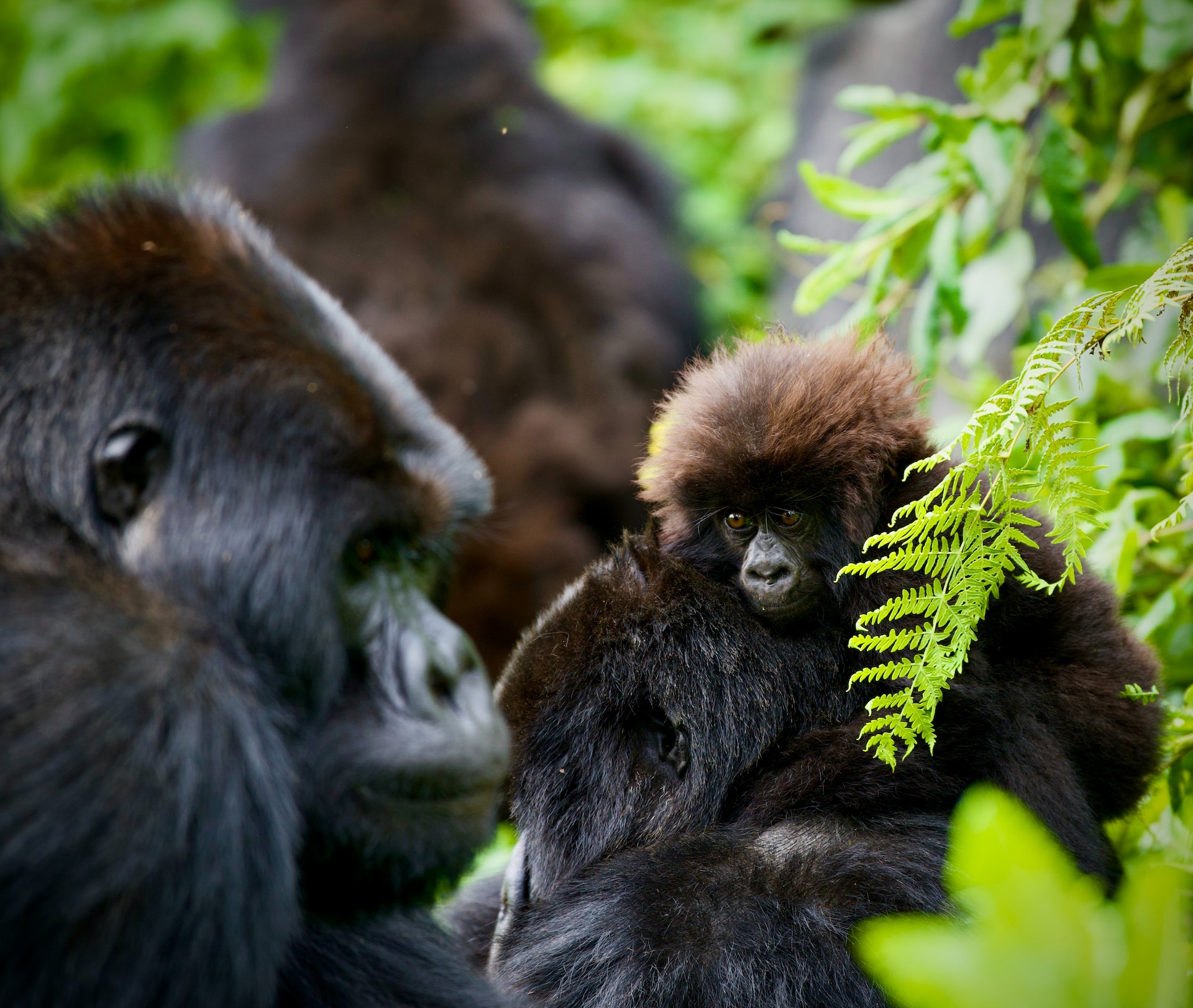
The eastern lowland gorilla, also known as Gorilla beringei graueri/Grauer’s gorilla, is the largest of the four gorilla subspecies and is the park’s most iconic species and major attraction in Kahuzi-Biega National Park.
Kahuzi-Biega protects the largest remaining population of eastern lowland gorillas—a species listed as endangered by the IUCN.
These lowland gorillas live within the bamboo forest, the lowland forest, and the transition forest zones in Kahuzi-Biega NP, and the other national park is Maiko National Park in the DRC.
Observing them move through dense forest cover/vegetation, building nests, feeding on stems and bark, and nurturing their baby gorillas is one of the most rare worldwide wildlife experiences—unique to this part of eastern DR Congo and worth witnessing during Congo gorilla trekking safaris and tours.
2) Eastern Chimpanzees & Other Primates in Canopy Zones
The mountain and high-altitude rainforest zones are also prime habitats for other mammals, including eastern chimpanzees, Hamlyn’s monkeys, and colobus monkeys.
These primates use the continuous forest vegetation as corridors for foraging, socializing, and nesting, giving visitors the chance to spot dynamic primate activity high up in the canopy during Congo primate safaris.
3) Spectacular Bird Species in Floral Transition Zones
The varied forest types—from subalpine heather to lowland forest—support over 349 bird species, according to the IUCN, including 42 endemic birds such as the Rockefeller’s sunbird, Grauer’s broadbill, and the Albertine owlet.
These birds thrive in different floral zones, making Kahuzi-Biega a top Important Bird Area (IBA) recognized by BirdLife International.
4) Two Spectacular Extinct Volcanoes (Mount Kahuzi & Mount Biega)
Mount Kahuzi and Mount Biega, both spectacular extinct volcanoes (dormant volcanoes), rise dramatically from the forest floor and are surrounded by layers of forest vegetation that change with elevation.
These dormant volcanoes provide sweeping views of floral transitions—from dense rainforest to subalpine heather—and create unique ecological gradients found nowhere else in sub-Saharan Africa.
OTHER RARE SITES/ATTRACTIONS
- Other wildlife species that are rare sites in Congo, e.g., forest elephants, forest buffaloes, elusive carnivores endemic to the Congo Basin (the giant forest genet (Genetta victoriae) and the aquatic genet (Genetta piscivora), etc.
- A set of amphibians, reptiles, and insects, i.e., Frogs, chameleons, geckos, and brilliantly colored butterflies that use the rich flora for breeding and feeding.
- Over 147 freshwater fish species are found in the streams and rivers that flow through forested catchment zones; 11 are endemic to the Lowa River basin.
- Lwiro Chimpanzee Sanctuary, located near Kahuzi Biega National Park
- Idjwi Island
Visit Congo’s Kahuzi-Biega National Park and see all these highlights firsthand during Congo safaris!
How Best to See the Kahuzi National Park Flora Highlights?
In order to see the highlights kept safe in the Kahuzi-Biega National Park flora, tourists need to take part in safari activities like.
- Eastern Lowland Gorilla Trekking: Track the endangered eastern lowland gorillas in their natural habitat.
- Bird Watching: Spot over 349 species of birds, including 42 endemic species, in the park’s various habitats.
- Guided Nature Walks: Explore the park’s diverse flora and fauna with a knowledgeable guide.
- Hiking and Mountain Climbing: Climb Mount Kahuzi and Mount Biega for panoramic views of the park’s flora zones.
- Cultural Experiences & Community Tours: Engage with local communities and learn about their culture and traditions.
- Lwiro Chimpanzee Rehabilitation Centre: Visit this sanctuary to see rescued and rehabilitated chimpanzees, and midway there, you will see the unique vegetation of Kahuzi Biega.
- Forest Exploration: Venture into the park’s different forest zones, such as bamboo forests grows and swamp forests, through the Tshibati Waterfall Trail.
- Photography safaris: Capture the park’s stunning flora and fauna through photography.
- Boat Cruise on Lake Kivu: Explore marine life and birdlife around the lake.
Tips for Exploring Kahuzi-Biega National Park
- Hire a Local Guide to aid you in gaining valuable insights into the park’s flora and fauna.
- Follow Park rules to minimize your impact.
- Pack accordingly for unpredictable weather conditions.
- Consider morning and evening sessions as the best times for birdwatching and spotting wildlife.
- Plan a Congo safari tour with a preferred tour operator.
- Discover its unique features and top attractions.
By following these tips and planning in advance, you’ll experience the best of Kahuzi-Biega National Park’s natural beauty and have a memorable adventure during Congo tours!
Threats To Kahuzi Biega National Park Flora and Vegetation
Some of the most worrying threats to the Kahuzi-Biega National Park Flora include.
- Deforestation due to agriculture and illegal settlements.
- Logging, particularly in western bank regions.
- Firewood Collection by local communities (almost 1,800 tons of charcoal collected per month).
- Climate change alters the patterns of vegetation growth.
- Poaching
- Habitat destruction
- Artisanal mining
- Bush Meat trading
- Illegal trade of the Baby Gorilla species (wildlife exploitation)
Flora Conservation Efforts in Kahuzi-Biega National Park
To protect the flora in Kahuzi-Biega NP from the devastating threats imposed on it, the park authorities (the Institut Congolais pour la Conservation de la Nature) and conservation organizations are undertaking several conservation policies, initiatives, management, and surveillance structures to protect it.
1) Reforestation and Habitat Restoration are some of the ongoing initiatives to protect the park’s ecological integrity.
2) Strict Monitoring of Illegal Logging is intended to prevent further degradation and protect the park’s forests from logging and deforestation.
3) Community education and engagement programs aimed at educating local communities in areas with high human density on the conservation importance and promoting coexistence with wildlife.
4) Partnerships with organizations like the Wildlife Conservation Society (WCS) to advance human rights-based conservation and protect the park’s wildlife and habitat.
5) Boundary delineation to clearly define the park’s boundaries, especially in lowland areas and corridors connecting high and low biographic regions.
With these conservation initiatives and management & surveillance structures, Kahuzi-Biega National Park is confident about the protection of its flora!
Why Flora in Kahuzi-Biega Matters Globally
Kahuzi-Biega National Park’s flora is globally significant due to its stunning biodiversity, unique vegetation transitions, and endemic species. These are some key reasons why the park’s flora matters:
- The park’s flora is home to over 1,178 plant species in the highland region alone, supporting a wide array of wildlife, including mammals, birds, and reptiles.
- Kahuzi-Biega flora features a complete and unbroken transition from lowland to highland vegetation, a rare occurrence globally, allowing for the study of plant adaptations to various altitudes and environments.
- The park’s flora is home to numerous plant species found nowhere else in the world, including the endemic plant Senecio kahuzicus, underscoring its unique role in biodiversity and evolutionary research.
- The park’s diverse flora provides food and habitat for numerous species, including the critically endangered eastern lowland gorillas.
- The park’s extensive forests play a role in carbon sequestration, contributing to climate change mitigation.
- The Kahuzi-Biega protected plant cover ensures the protection of watersheds, regulating the region’s hydrological regime.
This calls for the extreme protection of the vegetation and flora that are home to threatened species in this park!
Kahuzi-Biega National Park Flora FAQs (Frequently Asked Questions)
- What Animals Are in Kahuzi Biega National Park?
Kahuzi-Biega National Park is home to diverse wildlife, including eastern lowland gorillas, chimpanzees, bush elephants, various primates, and over 349 bird species, in a rich ecosystem.
These animals can be encountered during activities like eastern lowland gorilla trekking, nature walks, birdwatching, and mountain climbing the two dormant volcanoes Kahuzi and Biega.
- What Flora Is Found in Parsa National Park?
Parsa National Park’s diverse flora features Sal forests, riverine forests with Khair and Silk cotton trees, and various plant species, including Sabai grass and Chir Pine, in a unique ecosystem.
Kahuzi-Biega National Park’s diverse flora supports exceptional biodiversity, including eastern lowland gorillas, forest elephants, and rare species; stabilizes the climate; and represents one of Africa’s last true wildernesses, making it a global conservation priority and one of the unique protected areas in Africa.
Book your Congo safaris & tours to Kahuzi-Biega National Park today and learn more about its low to highland sector vegetation and conservation efforts!
What you may like
-
FAUNA IN KAHUZI BIEGA NATIONAL PARK-ANIMALS
Read more -
Eastern Lowland Gorillas – Eastern Gorilla of Kahuzi-Biega National Park
Read more -
THE EASTERN CHIMPANZEES OF KAHUZI-BIEGA NATIONAL PARK
Read more -
LANDSCAPE OF KAHUZI BIEGA NATIONAL PARK, CONGO
Read more -
Mount Kahuzi Climbing Mouse
Read more -
Mount Biega
Read more
Want to visit Kahuzi-Biega?
Kahuzi-Biega National Park, is a secure area close to Bukavu town in Eastern Democratic Republic of Congo.
